Why I Don’t Wear an Apple Watch
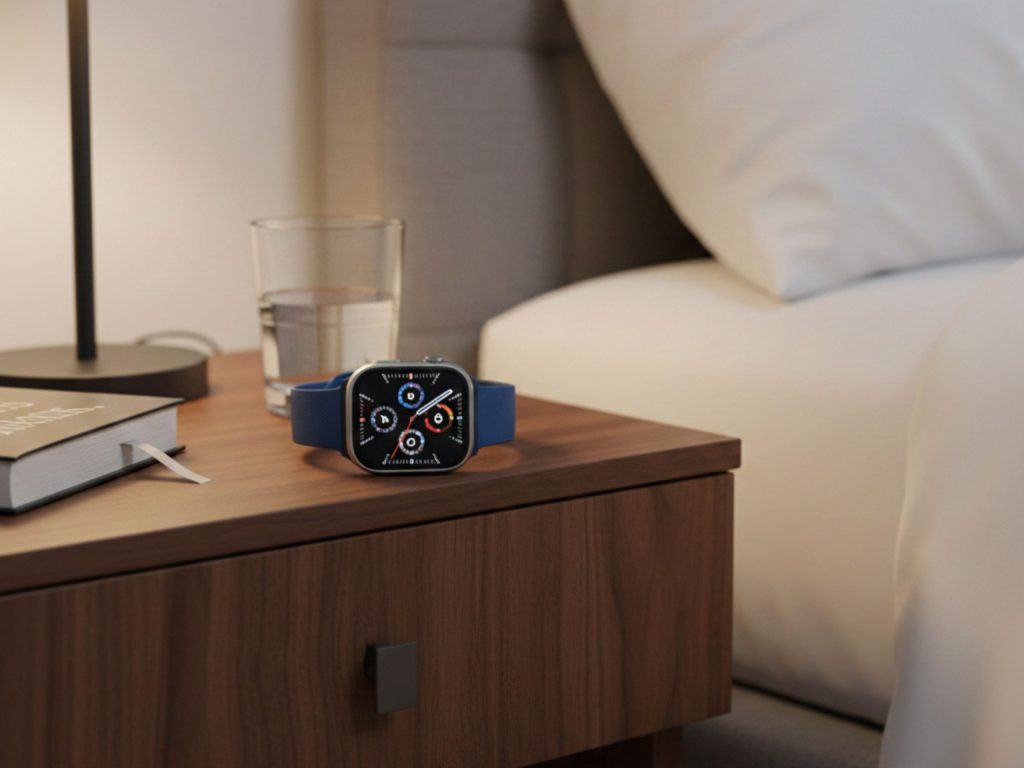
I recently made a deliberate choice to stop wearing a smartwatch. For people who know me, that might seem surprising. I’m generally enthusiastic about technology and tend to stay on top of new tools, whether that’s artificial intelligence or the latest gadget. This decision wasn’t rooted in being anti-technology or resistant to change. It was a move toward intentionality. Human beings are always being formed by the things they interact with, and over time I realized the smartwatch had become a source of accidental formation that no longer served the way I wanted to live.
Formation rarely announces itself. It doesn’t arrive as a clear choice or a conscious decision. Most of the time, it happens quietly through repetition, convenience, and habit. We adopt tools because they’re useful, and only later realize they’ve been shaping us in the background. Over time, what began as a convenience starts to feel like a default, and what feels like a default often goes unquestioned. The smartwatch didn’t create this dynamic for me, but it made it visible.
Table of Contents
The first cost I noticed was interruption
The primary issue was the constant noise. I found myself in meetings where I was physically present but mentally elsewhere, pulled away by a vibration on my wrist. According to the American Psychological Association, a significant percentage of adults now describe themselves as “constant checkers,” a habit associated with higher stress and reduced ability to stay focused. What stood out to me was that the distraction didn’t require action. Even without looking at the screen, the interruption created cognitive load and quietly pulled my attention away from the people in front of me.
Even if you don’t look at the screen, that notification creates a cognitive load. It pulls your attention away from the people in front of you. I run several businesses, and being mentally present with my team and my family is too important to give up for the sake of an alert.
What surprised me most was that distraction didn’t require participation. Even when I ignored the notification, my attention still shifted. A small part of my mind broke away from the moment, wondering what it was, whether it mattered, whether it needed a response. Those moments accumulated. By the end of the day, I wasn’t exhausted from the effort. I was exhausted from fragmentation. Fragmentation makes it harder to do meaningful work and harder to be fully present with people. It creates days that feel busy but thin.
Over time, I realized the problem wasn’t simply that my attention was being interrupted. It was that my attention was being claimed. Notifications arrive with a sense of urgency, but urgency is not the same as importance. Many things ask for attention. Far fewer deserve it. When everything presents itself as equally urgent, discernment becomes difficult, and presence becomes rare.
Data vs. Noise
My move away from a smart watch was not a move away from health data. About three years ago, I had some detailed blood work done that served as a wake-up call. My cholesterol and blood sugar were out of alignment, and seeing those numbers clearly forced a level of honesty I couldn’t ignore. By tracking my metrics, I was able to make real changes and lose about forty pounds. The data mattered. It moved me from vague concern to concrete action and helped me take responsibility for my health.
I value data because it allows me to be proactive rather than reactive. Used well, information creates clarity and supports intentional decisions. What I eventually realized, though, was that the issue wasn’t tracking itself. It was interruption. The smartwatch didn’t simply present information; it placed it in a context that constantly demanded response. Many of the notifications on my wrist weren’t neutral signals. They were the product of systems designed by large companies, algorithms, and teams of data scientists whose job is to capture attention, drive engagement, and ultimately sell or market something. That attention economy, when strapped directly to my body, trained me to respond to urgency that often had little to do with what was actually important.
Over time, that environment shaped my behavior. Some alerts came with an artificial sense of urgency. Others created a low-grade anxiety, a persistent feeling that something might need my attention even when it didn’t. I found myself reacting more than choosing. The benefit flowed largely to the systems sending the notifications, not to the life I was trying to live. Removing the smartwatch didn’t eliminate data, but it did remove that constant pressure. Without the steady demand to check, my attention began to settle. I became better able to distinguish between what was merely asking for urgency and what genuinely deserved it.
That realization didn’t stop at my wrist. It led me to delete social media from my phone and remove other apps that existed primarily to pull my attention in ways that weren’t life-giving or necessary for my work. Many of the distractions I was responding to weren’t meaningful; they were simply effective. Making those changes made my phone noticeably more boring, but that boredom felt healthy. It returned my phone to its proper place as a tool rather than a device forming me in ways I hadn’t chosen. Attention shapes character, and I want the patterns of my life to move me toward being more patient, present, and Christlike, not more reactive and scattered.
I should be clear, though, that this isn’t a story of perfection. I still get distracted. I still lose focus. That’s part of living in the culture we’re all swimming in, one designed to monetize attention and normalize fragmentation. The goal was never to eliminate distraction entirely, but to stop cooperating with it unnecessarily. This has been less about mastering my attention and more about choosing an environment that makes faithfulness easier, even when I fall short.
Passive Infrastructure
To solve this, I switched to a smart ring. I use a RingConn because it functions as passive infrastructure. It collects health data quietly, without demanding attention. It does its job in the background and gives me access to the information when I choose to review it.
It stays around my hand for five days and charges in thirty minutes. It is a tool that works in the background. It allows me to collect the same high-quality data as a smartwatch without the constant pings that fragment my attention.
What I wanted from technology was not more capability, but less intrusion. I wanted tools that could support my life without constantly inserting themselves into it. The best technology, I’ve found, is often the kind that does its work quietly and then gets out of the way.
Intentional Formation
Technology excels at efficiency. It is great for sending a quick text or automating a task. But technology is far weaker at producing meaning. If we are passive about the devices we carry, we allow them to form our habits for us. Stepping away from a smartwatch was a way of being more intentional about what I allow to shape my mind, my time, and my attention.
As Andy Crouch says:
“Technology is not just a tool; it is a force that shapes our habits, our relationships, and our sense of what matters.”
That choice also clarified something else for me. If some technology works best when it fades into the background, other things matter precisely because they remain visible. Not everything we carry should optimize us. Some things should remind us who we are and where we’ve been.
Markers of Seasons
Now, instead of a screen on my wrist, I wear analog watches. To me, these are markers of seasons and milestones. I have a Seiko handed down from my grandfather that still works fifty years later. I have a vintage Omega Seamaster that I bought when I started a new job ten years ago.
Physical objects anchor memory in a way digital ones rarely do. An app update erases history; a worn watch accumulates it. When I look at the Seiko my grandfather gave me, I’m reminded not just of him, but of time itself: time passed, time given, time carried forward. These watches mark seasons of my life not because they tracked them, but because they were present for them.
Each piece has a story. They don’t interrupt me. They don’t vibrate. They simply exist as crafted items that remind me of where I’ve been and the milestones I’ve achieved.
Conclusion
Choosing to remove the smartwatch was about reclaiming my focus. I wanted to ensure that the things I expose myself to on a daily basis (whether technology, media, or habits) are things that I have chosen intentionally.
Efficiency is helpful, but meaning is what matters. By removing the constant interruptions, I am able to be more present in my work and more connected to the people around me.
Over time, I’ve come to believe that most questions about focus are really questions about environment. We talk about discipline and self-control, but we rarely examine the systems we’ve surrounded ourselves with. Changing the environment doesn’t remove responsibility. It makes responsibility more realistic.
Formation is happening either way. I would rather be the one who chooses it.