My Everyday Carry and the Thinking Behind It
I did not always think carefully about what I put in my pockets.
For most of my life, the answer was simple and unconsidered: phone, wallet, keys. That was the default. It was what everyone carried, and so it was what I carried. There was no philosophy behind it, no intention. It was accidental formation at its most basic, the kind that happens when you simply absorb the habits of your environment without ever stopping to ask why.
A few years ago, something shifted. I started managing apartments. Multi-family properties. And I discovered, somewhat embarrassingly, that I was not a capable man in the practical sense. There were basic things I could not do. A valve inside a toilet. A washer hose chewed through by a mouse. A lock that needed changing. Tasks that should take twenty minutes and cost almost nothing were instead costing me hundreds of dollars and a quiet sense of inadequacy. I had to call someone for problems I should have been able to solve myself.
That realization was more uncomfortable than I expected. It was not just a financial frustration. It was something deeper.
The Tools We Carry Are a Confession of What We Believe
There is a version of modern life that is entirely outsourced. Someone mows the lawn. Someone changes the locks. Someone fixes the pipe. None of that is inherently wrong. I still pay people for plenty of things, and I will continue to. But there is an important distinction between choosing to delegate something because you have discerned it is the wisest use of your time, and delegating it because you simply do not know how to do it yourself and have never thought to learn.
The first is wisdom. The second is dependency masquerading as convenience.
Morgan Snyder, in his book Becoming a King, frames this in a way that stayed with me. There is something spiritually meaningful about a man who can make things, fix things, face a problem with his hands and his tools and do something about it. It is not about machismo. It is about wholeness. Capability. The refusal to be passive when the world asks something of you.
That framing feels more urgent now than it did when I first encountered it. For most of my career, the work I took pride in was cognitive — analysis, decisions, strategy, the things that happened at a desk or in a meeting room. That kind of work still matters. But with AI accelerating the way it is, the desk work we have long prided ourselves on is increasingly something a machine can do. As the digital world becomes more commoditized, something interesting happens to the physical one. Work done with hands becomes rarer, and what becomes rarer becomes more valued — not because it is inherently superior, but because people recognize the care and thoughtfulness that went into it. You can feel the difference between something made by a person who knew what they were doing and something that was simply produced. That distinction is going to matter more, not less, as the decades unfold. The man who can actually do things with his hands may have more of an edge than the man who is simply good at thinking about them.
There is something worth noticing about what impresses a child. Not a title. Not a salary. Not a corner office. A kid watches someone frame a wall, fix a pipe, or back a trailer into a tight spot and is completely captivated. There’s a reason every five-year-old at some point wants to be a garbage man — they’re watching someone operate heavy machinery and do something real in the world. That instinct is not naive. I think it’s correct.
Somewhere in the transition to adulthood, a lot of us quietly revised that judgment. We started sorting work by perceived brain power, and physical skill got moved down the list. The trades got treated as a fallback rather than a calling. That was a mistake — and the last few years have made it increasingly obvious. The electrician, the plumber, the mechanic — these aren’t consolation professions. They are people who can do things that actually need to be done, and no algorithm is coming for their jobs.
That framing changed the way I think about what I carry.
Why I Carry a Knife Every Day
In Texas, carrying a knife doesn’t require much explanation. There’s a cultural thread that runs even through the cities here — most Texans carry some sense of rural identity whether they earned it or not, and a knife fits comfortably inside that self-image. But talk to someone with no connection to that tradition, or spend time with people from places like the U.K. where carrying a knife is actually illegal, and the reaction shifts. Suddenly the tool feels unnecessary. Excessive. In a city where there is always someone you can call, most people never develop the instinct to carry one. That reaction is itself telling — because the instinct to outsource every problem is exactly what I’m pushing back against.
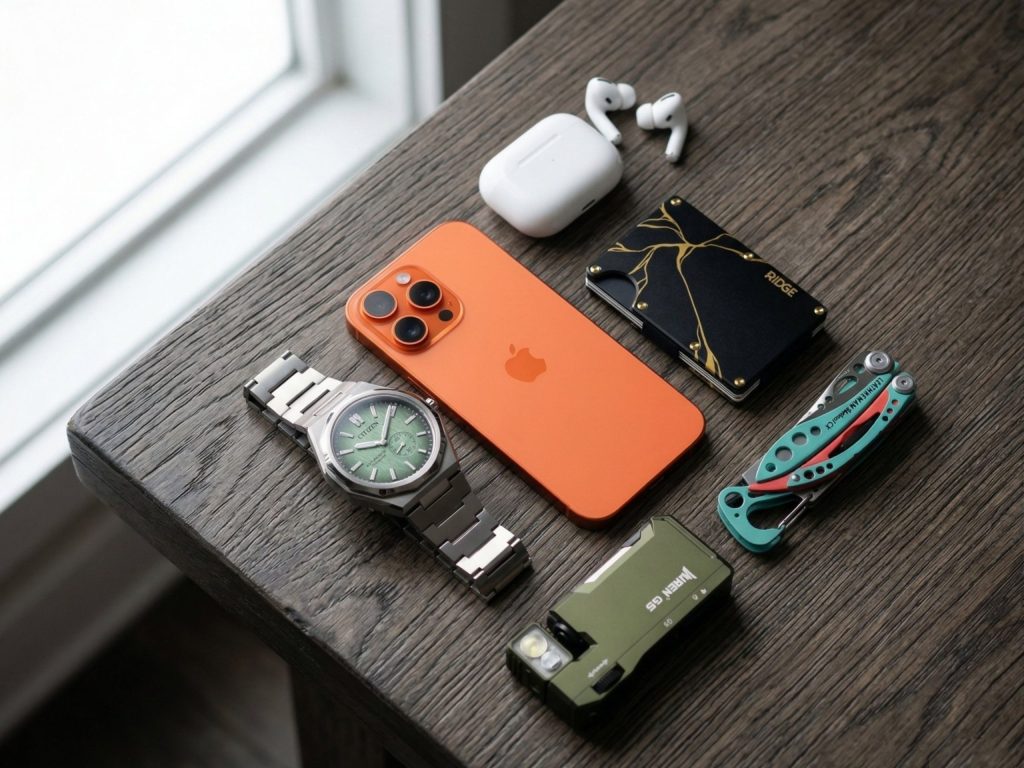
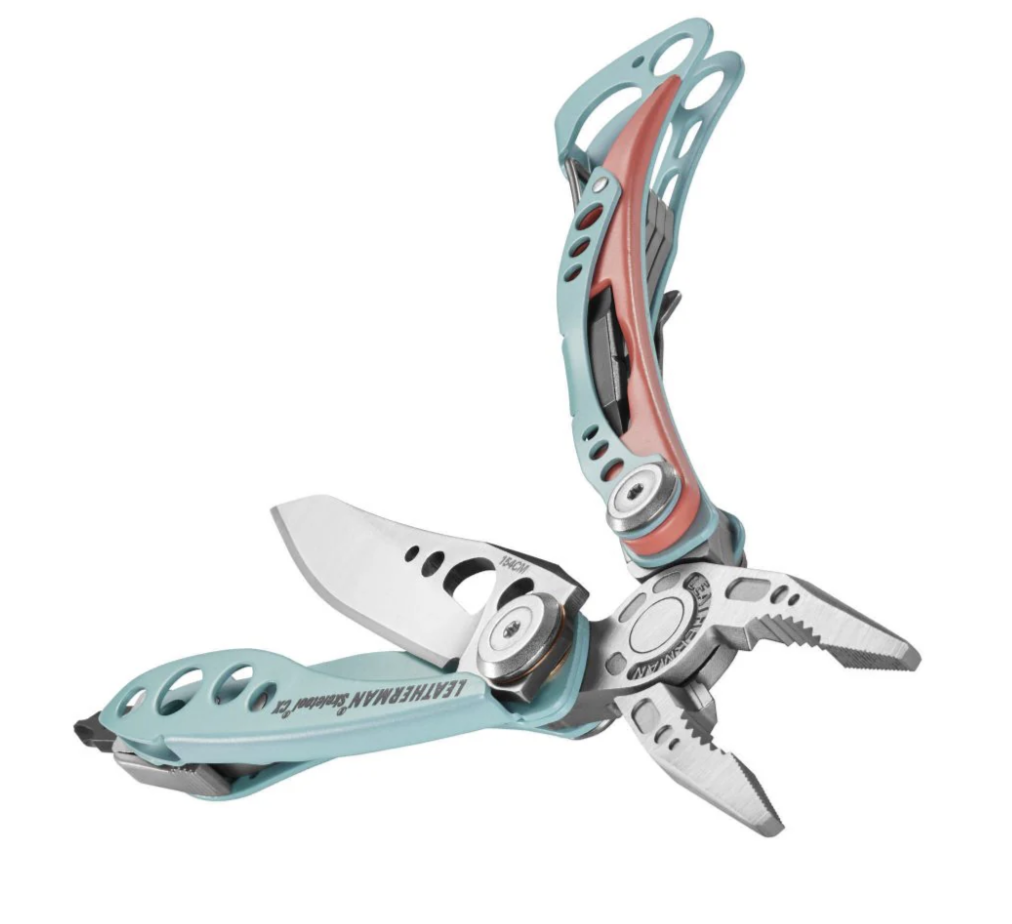
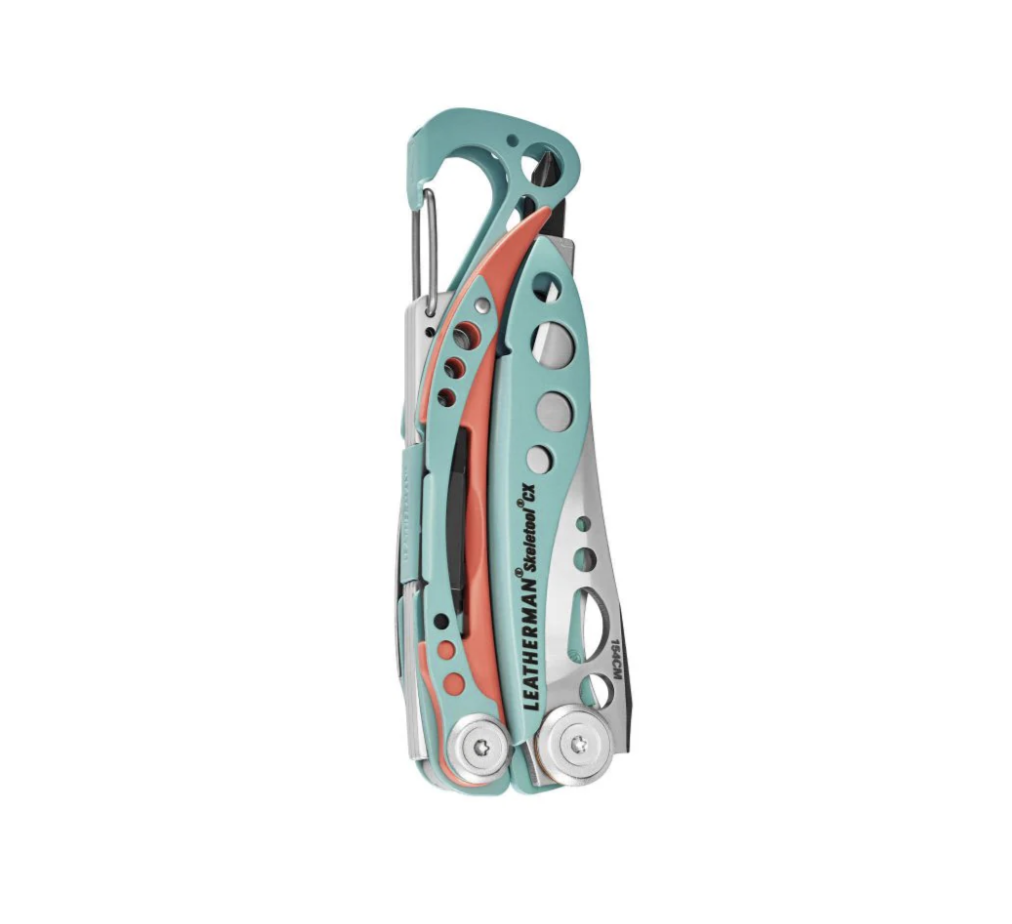
My answer is a Leatherman Skeletool CX. It has a blade, pliers, wire cutters, and a screwdriver, clips to my pocket, and stays there every day unless I’m boarding a plane or walking into a stadium. The CX designation matters — it means the blade is 154CM stainless steel rather than the 420HC on the standard Skeletool. That’s not a small distinction. 154CM holds an edge significantly longer, handles harder use without giving up, and in Houston’s humidity the corrosion resistance earns its keep. The blade geometry is a drop point with a partial flat grind: practical, not theatrical. Four inches closed, five ounces, every tool deploys one-handed. The design philosophy is subtraction — pliers, blade, bit driver, wire cutters, bottle opener, nothing else. It carries like a knife and works like a multitool without making excuses for either.
Mine is the Salmon and Blue colorway — pink and blue. My daughters picked it out on Father’s Day after I lost my previous one. They wanted that color specifically. I didn’t argue. Now every time I clip it to my pocket I’m carrying a small reminder of them, which turns out to be a better reason to carry a knife than most people have.
What I have come to believe is that carrying it is an act of intention. Every morning when I clip it to my pocket I’m making a small declaration about who I’m trying to become — the kind of person who can look at a problem and handle it. Who doesn’t need to pull out his phone and call a service company every time something requires a solution. There are also practical realities. I open Amazon boxes. I cut ropes. I fix small things that come apart at the apartments. I lend it to people standing there wishing they had something sharp. It is genuinely useful ten times a week in ways that are entirely ordinary and entirely unglamorous. But the unglamorous utility is the point. The knife is not a statement. It is infrastructure.
The Phone Is a Tool. I Treat It Like One.
I want to be honest about something: the phone is the hardest thing on this list to be intentional about. Not because I don’t know what I want from it, but because it was designed by some of the most sophisticated engineers in the world specifically to make intentionality difficult.
So I stopped trying to out-discipline the thing and started redesigning the environment instead.
The first move was social media. I’ve deleted it from my phone — not permanently deactivated, not making a statement — just removed from the device I carry all day. Instagram and X get reinstalled once a week to check in, then come back off. Part of what’s driving that discipline is a longer realization: over the last decade, I’ve been far more consumer than creator. I’ve scrolled more than I’ve built. I’ve absorbed more than I’ve contributed. That’s starting to shift, and keeping social media off my phone most of the week is part of how I’m protecting the time and attention that creation actually requires. The apps aren’t there to reach for, so I don’t reach for them. And nothing meaningful was happening in the gaps anyway.
The second move was the home screen. I rebuilt it around large shortcuts to the things I actually use: communication, navigation, notes, my property management software. It looks more like a dashboard than a consumer product. That’s intentional. If you pick up my phone expecting to browse, there isn’t much to browse. The friction is the point.
The third move was notifications. I went through every app and asked one question: does this need my attention in real time, or am I just letting it interrupt me out of habit? Almost everything got turned off. What’s left is a short list of things that genuinely warrant the interruption.
The fourth move was geofencing. Certain apps and features turn off automatically depending on where I am — at home, at the ranch, in a meeting. The phone does less in the places where I want to be most present. I didn’t get more disciplined. I changed the rules of the environment.
The phone is still the most powerful tool I carry. I’m not pretending otherwise. But a tool should serve the work. The moment it starts shaping the work — shaping the man — it’s no longer serving you. It’s using you.
The Rest of What I Carry
Wuben G5 Flashlight. Not because I distrust my phone’s flashlight — I just don’t want to crawl under a sink with a $1,000 device. The G5 is roughly the size of a box of matches and fits in the change pocket of my jeans, which tells you everything about why I carry it. It puts out 400 lumens with a 180° rotating head and an adjustable clip, so I can angle it wherever I need it and clip it to my shirt hands-free. It charges via USB-C, has a locking switch so it doesn’t accidentally fire in my pocket, and the magnetic base sticks to any metal surface. It also has an RGB mode, which I use exactly never, but my kids think is the greatest thing they’ve ever seen.
Apple AirPods Pro. I don’t know how I functioned without these. Calls without holding my phone. Podcasts and audiobooks without fumbling for earbuds. Noise cancellation when I need to block out a job site or a loud restaurant and actually think. They track with Find My, which has saved me more than once. Frictionless access to audio means I actually use the time well instead of defaulting to silence or distraction.
Ridge Wallet — Kintsugi Collection. I carry the Ridge with a money band rather than a money clip — it holds more cards without the bulk, which matters when you’re running multiple businesses and the Apple Wallet app can’t differentiate between the same card type across different entities. The one I have is from Ridge’s Kintsugi capsule collection. Kintsugi is the Japanese art of repairing broken pottery with gold — the idea being that the break is part of the object’s history, not something to hide. Ridge took that concept and laser-engraved it onto 6061-T6 aluminum with gold oil-filled designs, eight unique patterns distributed randomly. You don’t choose which pattern you get. That felt right to me. Inside is a slim Find My card that charges wirelessly and only needs power every few months. I haven’t lost my wallet since I started using it, which tells you everything about whether it earns its place.
Citizen Zenshin. My everyday watch right now is a Citizen Zenshin 60 —The watch is driven by a mechanical 8322 automatic movement with a 60-hour power reserve, featuring an integrated titanium bracelet and a green fume dial. Because of the titanium construction, it possesses a kind of weightless utility that allows the piece to effectively disappear on the wrist. The green is a nod to my Baylor background. It’s not an expensive watch, but it’s a well-made one, and every watch I own has a story attached to it. That’s the criteria. Not price. Not status. Story.
RingConn. This is my health wearable — similar to an Oura ring but without the monthly subscription fees. It tracks sleep, heart rate, and recovery quietly in the background. No screen. No notifications. No vibrations on my finger demanding attention. It collects data and gives me access to it when I choose to look. I wrote about this at length when I stopped wearing an Apple Watch, but the short version is that passive infrastructure is always better than active interruption. The RingConn is exactly that.
Willpower is unreliable. The environment is not. Every item on this list exists to make the right choice the easier one.
Capability Is a Form of Presence
When I can fix something myself, I am more present. I am not waiting for someone else to solve the problem. I am not helpless in the middle of it. I am there, engaged, doing the thing that needs to be done. That presence — meeting a moment with capability rather than anxiety — is something I want to cultivate.
I want my children to grow up watching a father who can do things. Not because of pride, but because capability is a gift you give to the people who are watching you. And the people most likely to be watching you are the ones who love you most.
Formation Is Happening Either Way
I do not carry a knife because I am trying to be interesting. I carry it because it reminds me, every single day, that I want to be someone who shows up — who can do something, who does not wait for someone else to handle the hard moments. It is a small object. But the intention behind it is not small at all.
Formation is happening either way. I would rather be the one who chooses it.